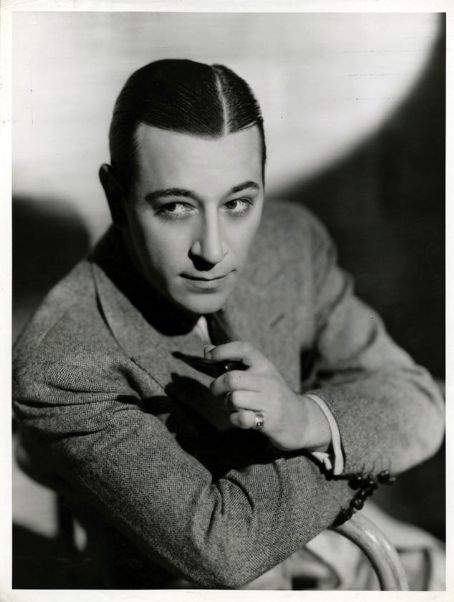
A Fine Man Once Said:

"Part of the 10 million I spent on gambling, part of it on booze, and part of it on women. The rest I spent foolishly."

- George Raft


Monday, May 9, 2011

What We're Ogling - Men's Ex.: The World of High End Men's Shoes Vol. 3

Men's Ex: The World of High End Men's Shoes, Volume III

          As we've stated previously here at An Uptown Dandy, publishers of men's style magazines in the Far East are really playing on a different level right now. As an English language magazine, The Rake is certainly somewhere near the top when it comes to men's style. However, if we're strictly talking shoes, as An Uptown Dandy has been known to do from time to time, then look no further than Men's Ex.

*****

          Once upon a time, the bar for men's shoe magazines was set by Esquire Japan's Last Magazine. Unfortunately, publication did not last very long (bad pun intended). Fortunately for shoe enthusiasts around the world, Men's Ex stepped into the breach with their periodic publication of several volumes of The World of High End Men's Shoes.

          While picking up my copy of Volume III at Kinokuniya bookstore in New York City, a clerk informed me that Volumes I & II were published several years ago. So apparently publication of the World of High End Men's Shoes is sporadic, at best. However, based on what An Uptown Dandy has seen (if not read) so far, it's worth the wait.

          Really, what other magazine provides in-depth information on shoe manufacturers by country of origin? With detailed descriptions and images of a variety of models? This is probably overkill for the average reader of typical men's fashion magazines, but for shoe aficionados, well, you probably won't hear any complaints.

*****

          As someone who enjoys collecting vintage shoes, I was especially delighted while perusing the article on vintage Edward Greens.


          I had recently picked up a pair of vintage shoes made in England for Paul Stuart in what appeared to be Edward Green's edwardian antique. There they are: Edward Green's Kingston model on display with other vintage styles on the defunct 201 last. There are also similar sections for shoes on the 32, 33, 82, 88, 808, 888, and 202 lasts. The page also includes a photo of various insoles from re-branded Edward Green shoes - always useful information when scouting for vintage Edward Greens.


          Additional in-depth information is also provided for the various Edward Green insole stamps,  the "Made In England" sole stamping, as well as the last and sizing information (written inside each pair of Edward Green shoes) that have been used throughout the years.


*****

          To summarize, you simply won't find this kind of attention to detail about men's shoes anywhere else. Volume III of the World of High End Men's Shoes by Men's Ex: far and away the best magazine out there for the shoe connoisseur.

Friday, May 6, 2011

George Raft: America's Lost Sartorial Icon (Part Two)


          As previously mentioned in Part One, Raft was one of the first guys on Broadway to sport that most classic look of the American gangster, the light-colored suit with dark shirt and light tie. It sounds cliched now, but its hard to overstate exactly how closely associated this look became with the world that Damon Runyon and others immortalized in their stories about the Broadway of the 1920s and 1930s. When Raft dressed like that on screen, viewers could only guess as to whether he was imitating real-life friends like Owney Madden or Benny Siegel, or if the gangsters were taking their sartorial cues from Raft. His off-screen demeanor and look was so closely aligned with the popular image of the racketeer, that, when Raft first arrived in Hollywood, Los Angeles police assumed he had arrived out west as an emissary representing Madden's interests on the Coast. After repeated pestering, Fox studio head Winfield Sheehan contacted District Attorney Burton Fitts to ask that Raft be left alone. Of course, such goings-on only added to the "authenticity" of Raft's "tough guy" performances.

          Here we see some film shots and publicity stills of the aforementioned light suit/dark tie combination:


Each Dawn I Die, 1939

By the 1950s, the look was so associated with the gamblers, hustlers, and racketeers of the era, that Fred Astaire used the imagery to great effect in his stylized noire-ish dance sequence for the 1953 film, Bandwagon.


*****

          By the mid-thirties, Raft was known as a well-dressed man who personified the Broadway ethos. Around that time, he began a relationship with the socialite Virginia Pine. Befitting his newfound status as Hollywood royalty, Pine suggested that Raft frequent more conservative haberdasheries such as Oviatt's and Pesterre's. In February 1936, the magazine Modern Screen noted the conversion:

"Farewell-to-Elegance Item: George Raft announces, possibly with a nostalgic tear in his eye, that he has given up the high-waisted trousers which have so long been identified with the Raft wardrobe. 'Natty,' which used to be a one-word description of all the Raft finery, has been deleted from George's dictionary and his tailors have been instructed to mold his future garments along more conservative lines. We, who always wondered how George got his hands in his pockets without breaking an arm, congratulate him on his momentous decision. Goodbye, fond memories of former splendor; so long, classy cuts and dreams of checkered magnificence; and a polite hello to a brave new world - and awfully Bond Street - world!"

          As Raft was an established trendsetter at this point, men around the world took note. Whether Pine deserves the credit is unclear, although it seems that her relationship with Raft may have furthered his career simply by making  him a more comfortable dinner guest and and by softening his "underworld" aura. Whether by coincidence or calculated design, this newfound "respectability" culminated in Raft's only Oscar nomination, in 1937, for Souls at Sea with Gary Cooper. By 1938, Raft's relationship with Pine ended. As Virginia departed, Raft's high-waisted trousers returned.

          Of course, Raft never could quite rid himself of the "underworld" aura, despite the fact that he was a top box office draw (in 1940, his hands and signature were immortalized in cement in front of Grauman's Chinese Theatre). This was undoubtedly due to the fact that he was still socializing regularly with reputed gamblers and racketeers. Examples abound of Raft's high-profile friendships. He just happened to be at the scene when Benjamin "Bugsy" Siegel was arrested for running a bookmaking operation in 1944. When Raft's mother died in 1937, not one acquaintance from Hollywood attended the funeral. However, old friend and one-time Duke of the West Side Owney Madden (at that point retired to his fiefdom at Hot Springs, Arkansas) hopped a train with his sidekick Frenchy DeMange for the funeral in New York. Raft was at ease with these men because of their similar backgrounds and upbringing - facts that apparently were not lost on the movie-going public.

Raft with Benjamin "Bugsy" Siegel, 1944.


          Interestingly, if Raft's familiarity with racketeers, hoodlums, gamblers, and the other assorted denizens of the underworld helped him with his on-screen tough guy portrayals, this "authenticity" also hampered his professional career in some ways. He was a stickler for details - if he thought a scene was not realistic, he could become difficult on the set and would refuse to do the scene.

         On loan to Universal Studios for the film I Stole A Million in 1939, Raft told director Frank Tuttle he wouldn't do a scene where his character stuck-up a post office. Raft's reasoning? No one in their right mind would risk a federal rap for the little bit of money to be found in a post office. Raft refused to do the scene until the post office was changed to a tourist bureau.

          Much has been written about the long list of films - including Dead End, High Sierra, Maltese Falcon, and Casablanca - that went to Humphrey Bogart only after they were turned down by Raft. Of course, Bogart brought his own unique talents to the films, but its worth noting that Raft was always the first choice. It has been written that Raft often had trouble making his way through the scripts due to his lack of education, but it seems more likely that he simply did not have much interest in playing roles that he considered out of character or unrealistic. With that in mind, its not hard to believe the story that Raft  is said to have turned down Casablanca by stating that he just couldn't see himself crying alone in a bar over "some skinny Swedish broad" (Ingrid Bergman). The man who would be Bogart, indeed.

          As the 1930s drew to a close, Raft's popularity was at its zenith. Consider this report from the New York World Telegram of August 2, 1939:

George Raft is No. 1 Attraction at Sailing of Normandie

Old Neighbors Ignore Other Celebrities Including Mrs. Roosevelt and Norma Shearer

George Raft, the movie actor, who was born on West 41st Street, went back resplendently today to the old neighborhood and for a time was the No. 1 attraction among a large group of celebrities, gathered about West 48th Street pier for the sailing of the liner Normandie, including the wife of the President of the United States, a Cabinet officer and so many top-flight film favorites they could hardly be counted.

Oldsters of the district that bred Raft scarcely stirred when Mrs. Eleanor Roosevelt passed toward the gangplank to bid goodbye to traveling friends; longshoremen didn't even look up when beauty in the form of Norma Shearer floated by; but there was a prodigious stir among them, a stoppage of work, and a crowding around when Raft appeared.

Workmen and idlers grabbed for the Raft's hand for hearty shakes, and they asked for autographs and spoke to him with easy familiarity, awed only by the garments he wore.

'My God,' said a longshoreman, 'that coat talks to you.'

The coat was a brown affair with enormous checks, setting off a checked sports shirt and sundry other articles of various shades of brilliant browns.

Raft was among the largest group of passengers - 1,397 - to sail.

Mrs. Roosevelt bade goodbye to her uncle, David Gray, and to Henry Morgenthau, Secretary of the Treasury, Mrs. Morgenthau and their three children.

Rafael Trujillo, dictator of the Dominican Republic, sailed for the Riviera.

Other passengers who got some attention, after the Raft brilliance faded into a cabin were, besides Miss Shearer, Charles Boyer and his wife, Pat Patterson; Edward G. Robinson, his wife and their son; Bob Hope; Frederick Lonsdale, playwright; Gilbert Miller, producer; Roland Young.


          In later years, the elegance and style of actors like Raft from the Golden Age of Hollywood would be replaced in the 1950's and 1960's by the sophisticated cool of Frank Sinatra. Perhaps it is fitting, then, to leave the last word on George Raft to one of the Rat Pack who had a chance to see him at the pinnacle of his fame and popularity. Dean Martin was new to Hollywood in the late 1940s - around this time, Raft had recently split with Betty Grable. As Martin put it,

"Shortly after I first arrived in Hollywood, I had a chance to go to George Raft's house. As a kid, I guess I'd seen every picture he ever made, and to me he was a superstar. I was awed by his place in Coldwater Canyon. It was like the temple of a brothel. The most gorgeous women in town would be there. It wasn't just sex. They would swim nude in the pool or we would sit around and talk. George would lounge all day in his silk robe at poolside. He never swam. In fact, the only exercise he ever had was with broads or shuffling a deck of cards. Dinner was a special event. When the girls would unfold their dinner napkins there would either be a hundred dollar bill or some expensive earrings, or for specials broads a brooch or a bracelet. George had class."

Wednesday, May 4, 2011

George Raft: America's Lost Sartorial Icon


          Turn the pages of any men's style magazine and you'll find the usual obligatory salutes to the leading men of the golden age of Hollywood: from Gable to Cooper to Grant. However, in an era when the average American man was dressed in a suit and tie with a fedora to match, there was one star above all others who set the tone for the stylish dandies of the 1920s, 1930s, and 1940s. Indeed, George Raft might be a singular example of the era, in that he was an established sartorial trend-setter along Damon Runyon's Broadway  before he made it in Hollywood. When he eventually did become one of the leading box office attractions of the 1930s and 1940s - despite his terrible habit of turning down the films that would make Humphrey Bogart a legend, including Dead End, High Sierra, The Maltese Falcon, and Casablanca - Raft was transformed from neighborhood fashion-plate to national style icon.

*****

          Born on September 26, 1895 in a ten-family tenement on 41st street between 9th and 10th Avenue in the Hell's Kitchen section of Manhattan, Raft started out looking to make it big in boxing. After sustaining a broken nose, two black eyes, and a swollen jaw against Frankie Jerome, he gave up on the "sweet science" and started hanging out around pool halls on Broadway. Raft became something of a decent hustler, and it was during this period that he formed a partnership with another pool-room fixture by the name of Billy Rosenberg. Raft and Rosenberg were a pretty good team, and the two would often retire to Lindy's together after a night of hustling.

          One night, the two were in a booth at the famed establishment when two popular songwriters, Con Conrad and Ray Henderson, came in and were given special treatment by the Maitre'd. Shortly after, Raft lost his partner when Rosenberg changed his name to Billy Rose, who went on to pen such Tin Pan Alley classics as "Barney Google with the Goo Goo Googley Eyes," "You Gotta See Mama Every Night," "Me and My Shadow," That Old Gang of Mine," "More Than You Know," and "It's Only A Paper Moon."

          Raft continued his poolroom hustling when he wasn't chauffeuring his childhood friend, Owney "the Killer" Madden around or driving trucks full of "Madden's #1" bootleg liquor around town. His mother had always encouraged his love of dancing and in his spare time, Raft would frequent popular dance halls such as the Audubon Dance Hall or the Manhattan Casino. It was also during this period that he worked as a male escort in the "tea rooms" of Manhattan - well-appointed, romantically-lit cafes frequented by frisky housewives, prostitutes, and divorcees. It was around this time that Raft also became acquainted with a co-worker named Rodolpho Guglielmo, who would go on to become the great lover, Rudolph Valentino.

*****

          Raft himself first came to prominence as a dancer in the speakeasies and nightclubs of Manhattan. Soon enough, a who's who of notable names of the day were flocking to nightclubs like the "El Fey" Club to see Raft dance. As Milton Berle remembered, "The first time I heard about George Raft was through my brother Phil, who was a pretty good ballroom dancer.  . . Phil, who rarely spoke of anyone but himself, got to raving one day about the greatest dancer he had ever seen. Somehow he lured me into this ballroom to see George dance. He was the sensation of the dance halls in that era. No one had his class or ability."

Soon, Raft was a featured performer at the El Fey Club, earning $150 a week. Word of his prowess on the dance floor spread around the world as the most renowned performers of the day flocked to see him perform. As Fred Astaire commented,

"I went there several times to see George dance. I believe it was George Gershwin who first took us. He was a sensation in those days and we went especially to see George. The "El Fey" club was the "in" place to go. It was handsomely decorated in a gaudy red and gold but in many ways it was a dive. George was the main attraction, and Ruby Keeler and others who later became stars danced there also.

They served terrible champagne and booze in coffee cups, but it was mainly the entertainment that packed the place, and George did the fastest, and most exciting, Charleston I ever saw. I thought he was an extraordinary dancer and later I heartily recommended him to a club owner I knew in London."

          It was during this period that Raft also began earning enough money to indulge his sartorial appetites. Longtime Raft confidante Mack Grey later described the George Raft of this period:

"There wasn't a sharper dresser or a nicer guy on Broadway. George's suits were always the latest style. Wide lapels, high trousers, spats, and you could cut your finger on the crease in George's pants. He was one of the first guys to wear a black shirt with a white tie. He wore long collars. A pearl gray hat was pulled down over one eye. Come wintertime he'd either be in a black form-fitted coat with a velvet collar or a sporty brown camel wrap-around. He wore fifty-buck shoes with pointy toes, shined so bright you could see your face in them."

          When Raft eventually went west to Hollywood, the wardrobe that so captivated Grey on the streets of Manhattan would be captured in all its glory on the silver screen for the rest of the country to experience. After his star-making turn as Tony Camonte's "little boy," the coin-tossing gangster Guino Rinaldo in Scarface, Raft would receive top-billing in his own films. Raft's sartorial sensibilities were on full display in one of his first featured roles in Night After Night (1932). Although the film is now remembered as Mae West's screen debut - old friend Raft secured the role for her - it also captures the youthful Raft in all his sartorial splendor. In these screen shots, we see the long collars, wide lapels,  and high trousers that Grey spoke so admiringly of:


          In the above snapshots from the film, we see the high-waisted trousers that were a Raft trademark. In the first shot, we also get a good look at the long, pointed collar. Note also how Raft has tucked the tie into the suspender. Finally, these shots also provide a good example of the pomaded "patent leather" hairstyle - Raft was said to use a full jar of Vaseline to perfect the look.


           In these snapshots from the same film, we see Raft's wardrobe in motion. In the first shot, we see the wide, peaked lapels on the single-breasted three-piece suit. Note how the high-waisted trouser is hidden by the vest once Raft is fully dressed. Of course, Raft also leaves the vest unbuttoned at the bottom. Interestingly, while the placement on the armholes of the suit jacket seem rather high and, altogether, the suit jacket exhibits a rather tapered fit, the pants retain that distinct "baggy" look of the 1930s.


         Finally, we see Raft in all his glory - the three-piece suit with peaked lapels, vest, the long pointed collar, and high-waisted trousers. Also note the high-button stance on the two-button jacket. Raft's sleeves show off impeccable tailoring, with just a touch of shirt cuff peaking out from under the suit jacket sleeve. The finishing touch is the pocket square just under Raft's white floral arrangement pinned through the jacket's lapel.

*****

          In Part Two, we'll continue to look at Raft's position of prominence as a sartorial trendsetter of the 1930s and 1940s on a scale that dwarfed the reputation he had previously achieved on Broadway during the Roaring Twenties. Along the way, the Uptown Dandy will take a closer look at Raft's brief sartorial conversion away from the "racketeer" image to a more conservative look in the late 1930s.