A Fine Man Once Said:

"Part of the 10 million I spent on gambling, part of it on booze, and part of it on women. The rest I spent foolishly."

- George Raft


Thursday, August 6, 2020

“Never Got The Big Money”

See the source image


Greetings, everyone! 

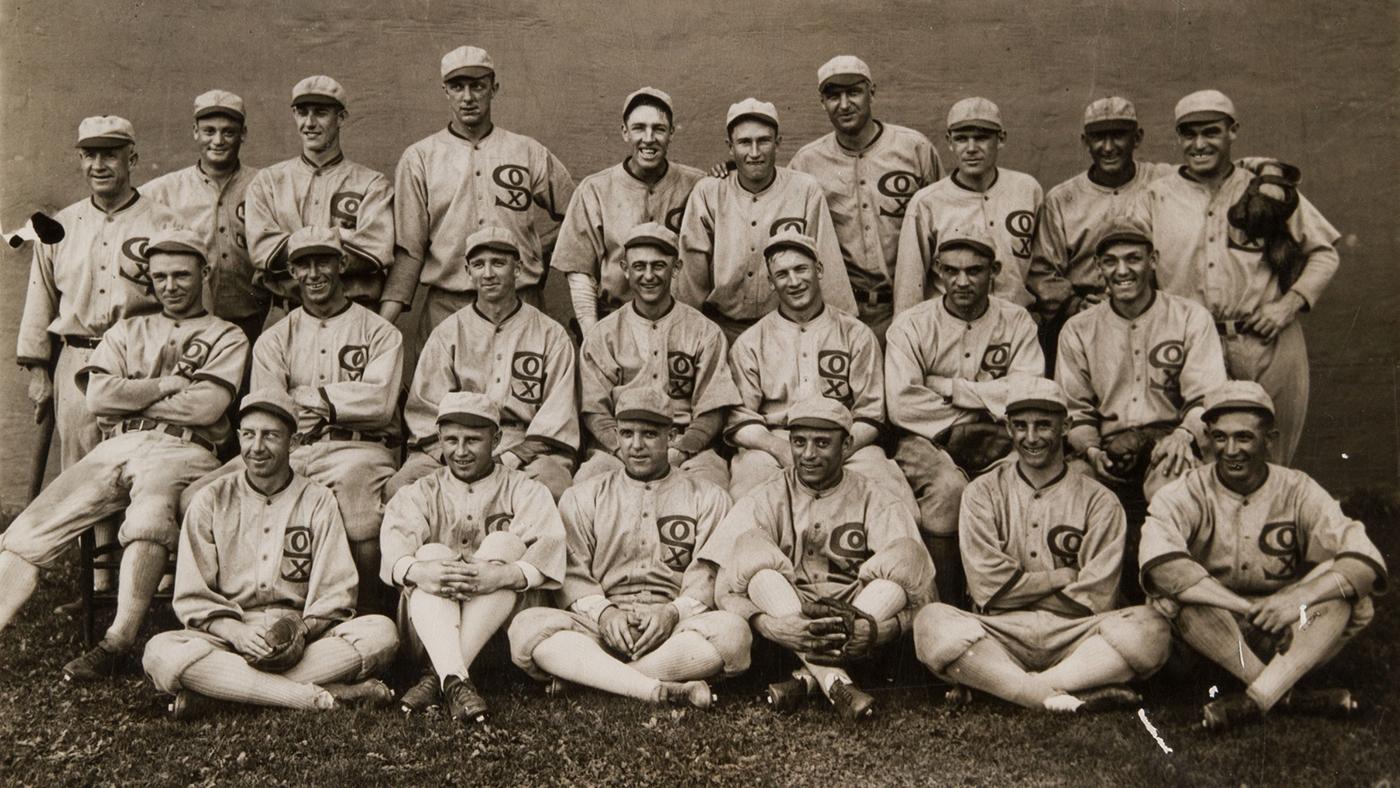
I hope you're all staying safe and healthy during these difficult times. You all know An Uptown Dandy as a place that focuses on the historical and the sartorial, but over the next few weeks the focus will be entirely historical! I was looking to take a break from my historical fiction writing and as I was no longer commuting into New York City from the suburbs, I had more time to listen to various podcasts on the Black Sox scandal (Infamous America, Rob Neyer, etc.), a subject which never ceases to fascinate me. Of course, because some of New York's more infamous characters from that era came to be involved in the conspiracy to fix the World Series, these posts will fit right in here!


Recently, a school of thought has emerged to counter the popular position that the Black Sox were motivated to throw the World Series by poor treatment at the hands of White Sox owner Charles Comiskey. The arguments in support of the notion that Comiskey was actually quite generous with his players were certainly compelling but perhaps because of the popularity of ESPN’s The Last Dance documentary series, I found myself wondering why no one seemed to look at the question of whether the Black Sox were underpaid using contemporary notions of what it means for a professional athlete to be underpaid, i.e. within their own clubhouse or, in this case, vis a vis their Clean Sox counterparts, in the same way that Scottie Pippen was considered cruelly underpaid vis a vis his teammates’ salaries when considering their respective contributions to the 1997-1998 Chicago Bulls.


With that in mind, I took the salary information made available by Michael Haupart and Bob Hoie (via the Society of American Baseball Research's Black Sox Committee) to evaluate the 1919 player salaries within the Black Sox and Clean Sox factions. A comparison of the salaries of the two factions will show that, to put it simply, Comiskey was more generous with the Clean Sox faction. Using WAR as an indicator of player performance that year, I then sought to determine whether the more generous pay for the Clean sox was justified. What became clear, however, was that the WAR numbers were heavily skewed in favor of the Black Sox. In other words, while the Black Sox contributed more (according to WAR) to the success of the 1919 White Sox on the field, the Clean Sox were the primary beneficiaries of Comiskey’s largesse.


Did this inverse correlation between salaries and performance on the 1919 White Sox contribute to the decision by the Black Sox to fix the Series? Obviously, we can’t say for certain. However, it doesn’t seem unreasonable to conclude that it’s entirely possible.


Over the next few weeks, I'll be posting the entirety of my analysis from a paper titled “Never Got The Big Money”: Charles Comiskey, Scottie Pippen and the American Ideal of the Underpaid Professional Athlete (Or Were the Black Sox Well-Paid? Say It Ain’t So!) I hope that you enjoy it! 


Best,

Dan Flores

Wednesday, June 10, 2020

Portrait of a Harlem Policy Banker: Big Joe Ison


Two images of a Harlem policy banker. Joseph Ison, left, looking rather scholarly upon his entry into the United States in 1928 and, at right, exhibiting some of the swagger that he cultivated as one of the premier policy bankers in Harlem when he appeared as a witness in the corruption trial of Jimmy Hines in 1938. By 1931, Big Joe Ison was clearing anywhere from $8000-10000 per day from the nickel and dime bets that the people  of Harlem placed at his numbers spot. The players were generally a superstitious lot - they tended to play the same numbers on certain days, which usually guaranteed big profits for Big Joe. That is, until that dark day that came to be known as Black Wednesday, when the heavily played ‘527’ hit on Thanksgiving Eve of 1931. The bankers were hit hard and scrambled to pay off the winners. Big Joe was hit harder than most and it wasn’t long before word filtered back to him that the Dutchman might be willing to extend an emergency loan in exchange for a piece of his bank. Big Joe demurred until Schultz sent his muscle around in the form of Abraham “Bo” Weinberg, his number two man and chief enforcer who was credited with such notable hits as Salvatore Maranzano, Legs Diamond, and Mad Dog Coll. Did “Bo Legs” lean on Big Joe to get the Dutchman a cool 50-50 split of the Ison bank? The Puerto Rican knows.

I had previously posted these short portraits of various characters from my historical fiction novel to my feed on Instagram (@AnUptownDandy), but thought it would be worth posting here at the blog. From Pretty. A Novel From the East Harlem Cycle

Wednesday, May 6, 2020

An Afternoon in Chicago with John Binder & Matt Luzi


Here we have a photo like many others that we often see around the internet. A sepia-toned image from years gone by, of a moment captured and frozen forever, at first glance a family gathering on a surprisingly warm day that has forced some of the men to loosen their ties and take off their jackets. Sometimes, however, looks can be deceiving. Sometimes you come across a unique if not exactly rare photo like this, one that doesn’t just take you back in time but actually creates a new perspective on the past. Here we have an image from the Roaring Twenties of some of the men who came to define that era as definitively as Westbrook Pegler or F. Scott Fitzgerald ever did. Pegler and Fitzgerald’s work was characterized by the staccato bursts of a typewriter. The fellows in the photo had their work punctuated by the staccato bursts of a Thompson. As a matter of fact, one of the fellows posing here was later found to have in his possession two of the machine guns that were used to spit out a message for Bugs Moran on behalf of the Big Shot. Yes, Capone could be a killer but you wouldn’t know it from this image. Here, he reclines at center, the place of honor, surrounded by his confederates from the Windy City and their close associates from the Chicago Heights neighborhood. As you can see from the photo, some of the boys aren’t too happy about having their photo taken, even in such a pleasant setting, but Al wants his picture taken so what are you going to do?
Years ago, John Binder, a true historian of Chicago Gangland, was kind enough to open his archives to me when I was working on The Best Dressed Man In The Room. If there’s anyone who knows more about Chicago and the men who operated on the other side of the tracks, I haven’t met them. There might be such a person - maybe Matt Luzi - I just haven’t met them! The two of them have spent years working to identify the men in this photo conclusively, as well as the possible reasons for their meeting. It’s a wonderful piece and thoroughly researched - read it here:

http://www.myalcaponemuseum.com/id193.htm